

- AcuWell LLC300 East Ogden Ave
Naperville, IL 60563(630) 283-8817 

Latest Articles:
- • Outdoor Activities Best Enjoyed During Spring •
- • The Health Benefits of Spring Cleaning •
- • Delicious Recipes Using Spring Fruits and Vegetables •
Acupuncture
TCM and Cystic Fibrosis

Cystic fibrosis is an inherited disease that disrupts normal function of the epithelial cells in the body. Epithelial cells line the passageways of many of our vital organs, including the lungs, liver, kidneys, reproductive system and the skin. Those who have cystic fibrosis have a defective gene that impairs epithelial cell function. This can lead to a buildup of sticky mucus throughout the body that may eventually lead to lung damage and chronic coughing, affecting how patients with cystic fibrosis breathe and filter air, digest their food and absorb the nutrients from that food. In the United States alone, there are nearly 12 million people who suffer from this disease. Unfortunately, there is no known cure and most of those affected with the disease only live into their 20s and 30s. Current modern medicine treatments focus on increasing the quality of life by managing symptoms. continue reading
Acupuncture and Autoimmune Diseases
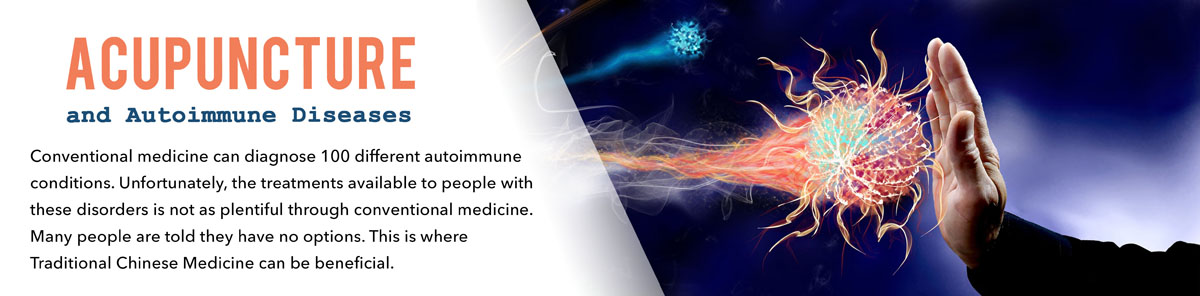
Autoimmune diseases are a collective group of disorders that plague nearly 50 million people in the United States today. When a person suffers from an autoimmune disease it means their own immune system is attacking the body and altering or destroying the tissues. Autoimmune diseases include things like rheumatoid arthritis, lupus, Crohn’s disease, pernicious anemia, multiple sclerosis, irritable bowel disease and Parkinson’s disease. continue reading
How Running Helped Me Overcome Grief from a Traditional Chinese Medicine Perspective

Today, I registered for the Naperville Half Marathon. This might not seem like a big deal, but one year ago I could barely run one mile. On my 38th birthday last fall, I dared myself to run for ten minutes at the gym. I barely made it. Slowly, I increased to two miles a few times a week. One day I ran over three miles for the first time in my life. I kept running four to five days per week. I loved the feeling of accomplishment, the rush of endorphins, and how the act of running seemed to minimize the stress of everyday life. When I’m running, the only thing that matters is running. There is only the synchronized movement of my arms and legs, the rhythm of my breath, the beats from my headphones.
I was already infatuated with running early last winter when my father passed away. After the acute grief passed, I was able to put my running shoes back on. I ran almost every day for three months. Running helped to moderate the grief I was feeling for about a day at a time. I didn’t always want to run; but, the pain of running was less than the painful emotions I was feeling about my father’s passing. This is when I fell head over heels for running. By using my body to control my mind, I was able to feel the grief but not be overburdened by it.
In Traditional Chinese Medicine, each energetic organ system is associated with an emotion. The Lungs are associated with grief, the Spleen with worry, the Heart with Joy, the Kidneys with Fear, and the Liver with Anger. As a Licensed Acupuncturist, I understood that running, an activity that activates the Lungs, could also help to dissipate Grief. It was with this in mind that I embarked on my daily running journey. From a Traditional Chinese Medicine perspective, running is also an activity that moves qi. When qi is stagnant, people may feel depressed or angry. The most common Oriental Medicine diagnosis that results from stagnant qi is called Liver Qi Stagnation. Endurance exercise exerts an anti-depressant effect by resolving qi stagnation. Other ways to resolve stagnant qi are with acupuncture and traditional Chinese herbal formulas such as Xiao Yao San (Free and Easy Wanderer).
From a Western perspective, endurance exercise is also known to have an anti-depressant effect. It is well known that running can boost endorphins and lead to a “runner’s high.” Other mechanisms that may lead to the mood-boosting effects of running are upregulation of the endocannabinoid system and increased Brain-derived neurotrophic factor (BDNF) production. BDNF is involved in new neuron growth and maintenance of existing neurons. Another lesser-known mechanism has to do with a tryptophan pathway. In the presence of stress without exercise, tryptophan may be converted to kynurenine which is converted to quinolinic acid. Quinolinic acid is a neurotoxin which may be involved with depression. When a person is stressed and they exercise, the tryptophan instead converts to serotonin which converts to kynurenic acid. Kynurenic acid is neuroprotective and may be partially responsible for the mood-boosting effects of exercise.[1]
Now that the grief has lessened, I find I can use running as a way to deal with periods of heightened stress. If I am worried or ruminating, I go for a long run. Whatever issues I think I have fade into the distance as my feet hit the ground repetitively. By the time the run is over, all I can think about is replenishing fluids and calories lost on the run. Once I’ve recovered, I feel empowered. Surely, If I survived that run, I can also survive life’s daily stressors.
This post was first featured in the Elephant Journal publication
https://www.elephantjournal.com/2019/08/how-running-helped-me-overcome-grief-from-a-traditional-chinese-medicine-perspective/
[1] https://www.foundmyfitness.com/episodes/exercise-depression
3 Acupressure Points for Low Back Pain
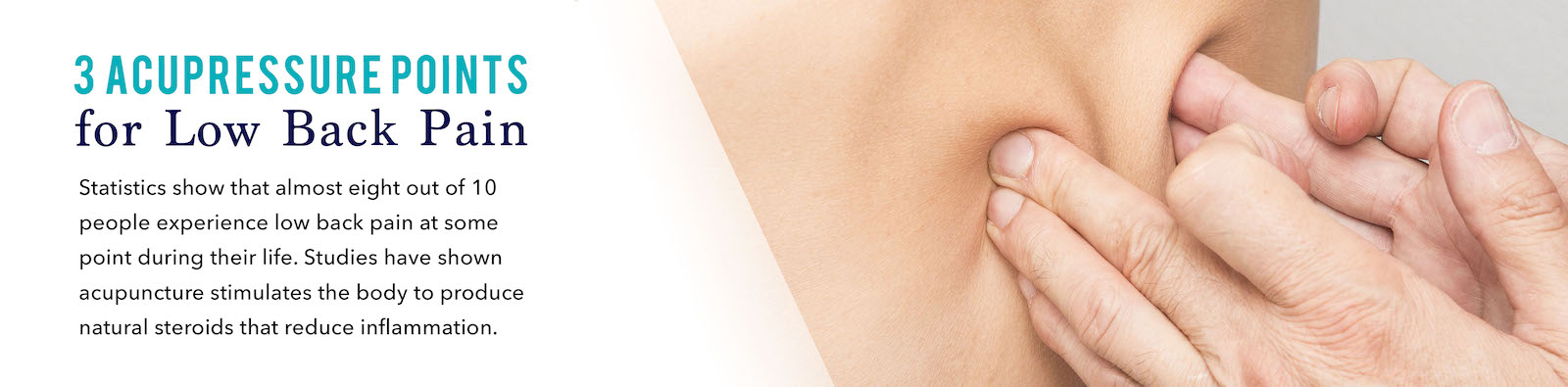
Statistics show that almost eight out of 10 people experience low back pain at some point during their life. Seeking medical treatment for back pain is very common. Typically back pain is fleeting and can be easily resolved with rest, heat and an occasional anti-inflammatory like ibuprofen. However, once the damage is done, the recurrence of back pain can be as high as 50 percent. Part of this is because as we age, things like muscles and tendons become less flexible and pliable. This can also be attributed to the fact that many people suffer from low-grade dehydration because they don’t drink enough water and they don’t ingest enough healthy fats that keep the muscles and tendons loose. It is also very well known that in the United States, people are too sedentary, and this leads to excess weight gain that can create added pressure on the body, especially the low back. continue reading
3 AcuPoints for Anxiety

One of the most wonderful things about being an acupuncturist is the ability to stimulate points on my own body when I need to. If I get a headache, or feel a cold coming on, I can always hop up on my table for a quick tune-up with some needles. Even when I’m not at the office, the magic of acupuncture can still work for me – as long as I know where the points are and what they do, I can press on them and get results. continue reading